
Why Bearings Fail and How to Prevent It
Bearings are essential components in industrial machinery, helping reduce friction and support rotating parts. Despite being designed for long service life, bearings often fail prematurely due to improper maintenance, contamination, or incorrect installation. Understanding the causes of bearing failure can help industries reduce downtime, improve productivity, and lower maintenance costs.
Common Causes of Bearing Failure
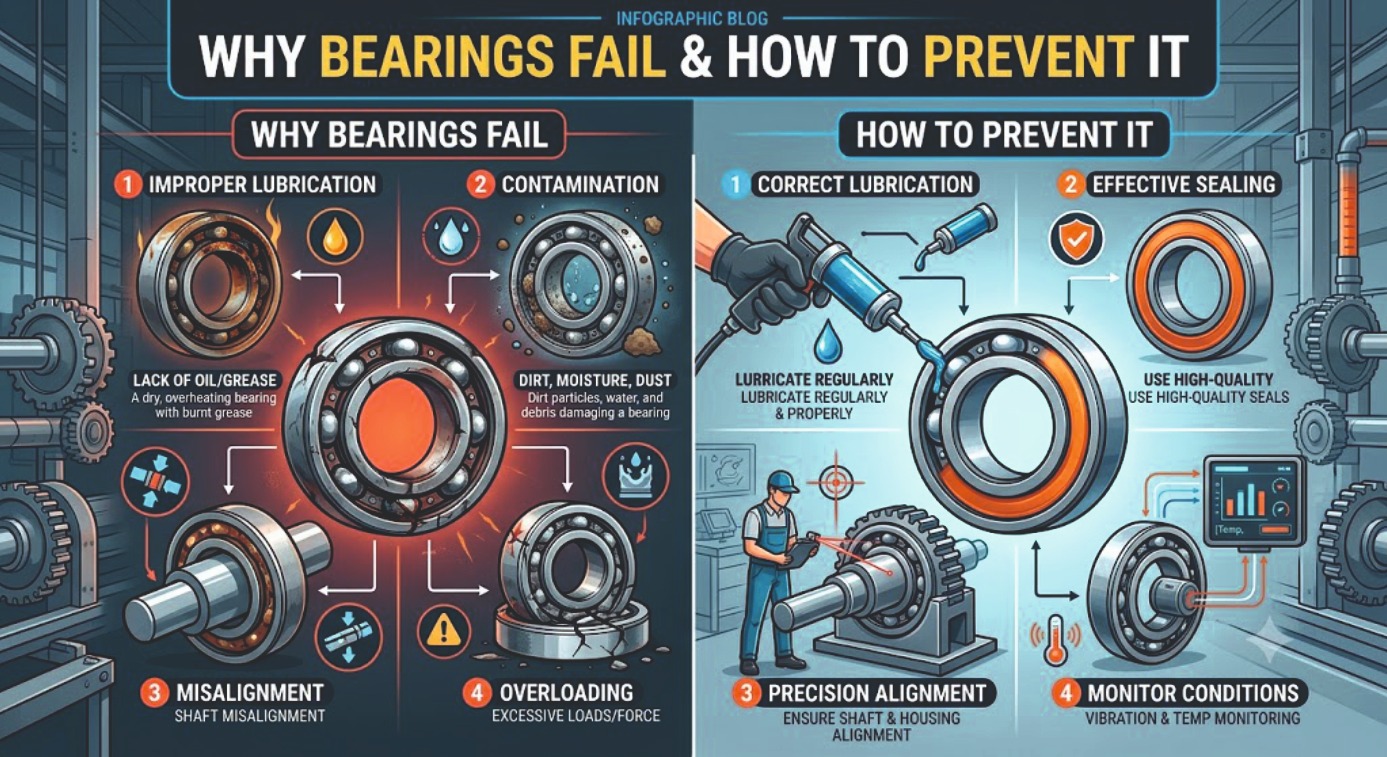
1. Poor Lubrication
Insufficient or incorrect lubrication is one of the leading causes of bearing failure. Without proper lubrication, metal-to-metal contact increases, generating excessive heat and wear.
Prevention:
- Use the recommended lubricant.
- Follow proper lubrication schedules.
- Avoid over-greasing and under-greasing.
2. Contamination
Dust, dirt, moisture, and debris can enter the bearing and damage rolling elements and raceways. Even small particles can significantly reduce bearing life.
Prevention:
- Use quality seals and shields.
- Maintain a clean working environment.
- Store bearings properly before installation.
3. Improper Installation
Using incorrect tools or installation methods can damage a bearing before it even starts operating.
Prevention:
- Use proper mounting tools.
- Follow manufacturer installation guidelines.
- Ensure correct shaft and housing fits.
4. Misalignment
Misaligned shafts and housings place uneven loads on bearings, causing excessive vibration and premature wear.
Prevention:
- Perform regular alignment checks.
- Use precision alignment equipment.
- Monitor vibration levels.
5. Overloading
Bearings are designed for specific load capacities. Excessive loads can cause fatigue, cracking, and premature failure.
Prevention:
- Select the correct bearing type.
- Consider operating conditions during selection.
- Avoid shock loading whenever possible.
6. Corrosion
Exposure to moisture, chemicals, or harsh environments can cause corrosion, leading to surface damage and reduced performance.
Prevention:
- Use proper sealing systems.
- Choose corrosion-resistant bearings where required.
- Protect equipment from moisture exposure.
Warning Signs of Bearing Failure
Early detection can prevent costly breakdowns. Common warning signs include:
- Unusual noise
- Excessive vibration
- High operating temperatures
- Lubricant leakage
- Reduced machine efficiency
- Visible wear or damage
Bearing Failure Prevention Checklist
| Problem | Solution |
|---|---|
| Poor Lubrication | Use correct lubricant and schedule |
| Contamination | Maintain proper sealing and cleanliness |
| Improper Installation | Use correct tools and procedures |
| Misalignment | Perform alignment inspections |
| Overloading | Select bearings correctly |
| Corrosion | Protect against moisture and chemicals |
Why Genuine Bearings Matter
Using genuine bearings from trusted brands such as SKF, NSK, NTN, and FYH significantly improves equipment reliability. High-quality bearings offer better load capacity, tighter manufacturing tolerances, and longer service life compared to low-quality alternatives.
Why Choose Manish Bearing Enterprises?
Manish Bearing Enterprises supplies genuine industrial bearings and power transmission products to customers across New Delhi. Our team helps industries select the right bearing solutions for motors, pumps, gearboxes, conveyors, compressors, and other critical applications.
- Genuine SKF, NSK, NTN, and FYH bearings
- Technical product guidance
- Fast delivery support
- Extensive inventory availability
- Competitive pricing
Conclusion
Most bearing failures can be prevented through proper lubrication, correct installation, contamination control, and regular maintenance. By choosing high-quality bearings and following best practices, businesses can significantly improve equipment performance and reduce downtime.
For reliable bearing solutions in New Delhi, contact Manish Bearing Enterprises today.