
Common Types of Bearing Damage and How to Prevent Them
Bearings are designed to operate for thousands of hours under demanding conditions, but improper installation, poor lubrication, contamination, and excessive loads can significantly reduce their lifespan. Understanding the different types of bearing damage helps maintenance teams identify problems early, reduce equipment downtime, and improve machine reliability.
Below are the most common bearing damage types found in industrial applications and the best ways to prevent them.
1. Wear Damage
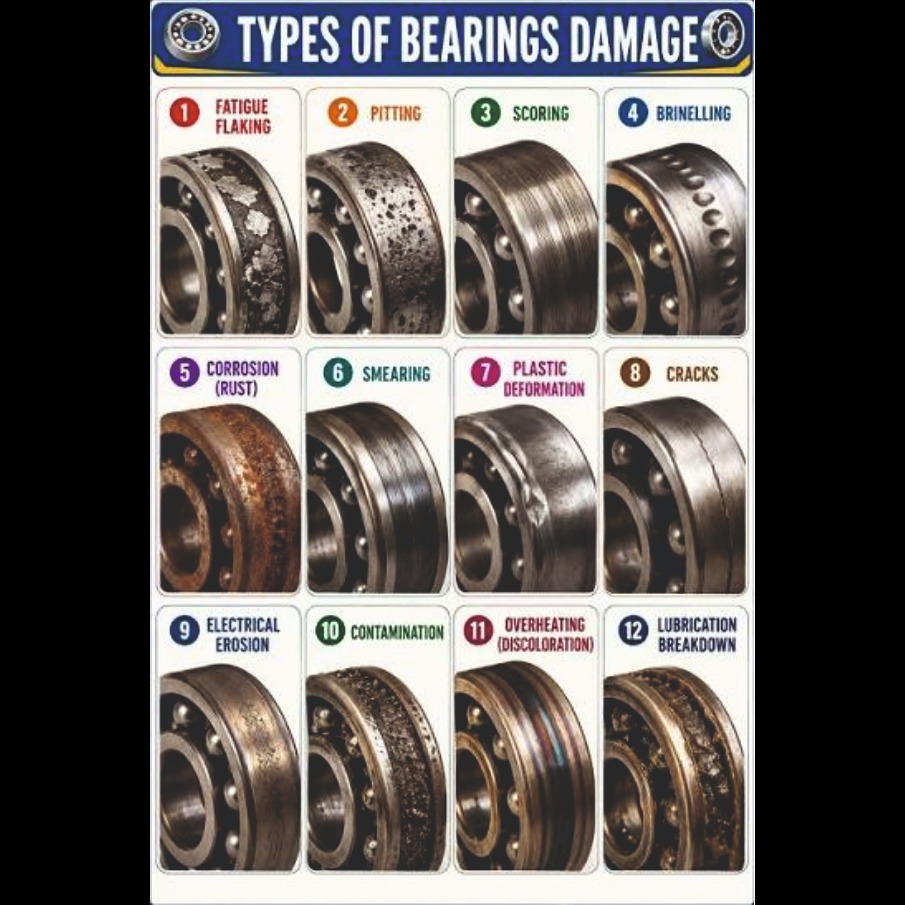
Wear occurs when bearing surfaces gradually lose material due to continuous friction or contamination. Abrasive particles in lubricants are one of the primary causes of bearing wear.
Common Causes:
- Contaminated lubricant
- Poor sealing
- Insufficient lubrication
Prevention: Use clean lubricants, replace damaged seals, and follow proper lubrication schedules.
2. Corrosion
Moisture, chemicals, and water contamination can cause rust and corrosion on bearing raceways and rolling elements. Corrosion weakens the bearing surface and accelerates failure.
Common Causes:
- Water ingress
- Humidity
- Chemical exposure
Prevention: Use corrosion-resistant lubricants, proper seals, and store bearings in dry environments.
3. Surface Fatigue (Spalling)
Spalling is one of the most common forms of bearing failure. Small pieces of metal break away from the raceway due to repeated stress, eventually leading to vibration and noise.
Common Causes:
- Normal fatigue after long service
- Excessive loads
- Poor lubrication
Prevention: Select the correct bearing size, maintain proper lubrication, and avoid overloading.
4. Brinelling
Brinelling appears as permanent indentations on the raceways caused by heavy impact loads or improper installation.
Common Causes:
- Hammering during installation
- Heavy shock loads
- Improper handling
Prevention: Use proper bearing installation tools and avoid transmitting force through the rolling elements.
5. False Brinelling
False brinelling resembles true brinelling but is caused by vibration when the bearing is stationary. It is commonly seen during equipment transportation or long periods of inactivity.
Prevention:
- Secure equipment during transport
- Rotate shafts periodically during storage
- Minimize vibration when machinery is idle
6. Smearing
Smearing occurs when excessive sliding between rolling elements and raceways generates heat, causing metal transfer and surface damage.
Common Causes:
- High-speed operation
- Poor lubrication
- Incorrect bearing selection
Prevention: Use suitable lubricants and select bearings designed for high-speed applications.
7. Electrical Damage
Electric current passing through bearings can create electrical pitting and fluting, especially in electric motors using variable frequency drives (VFDs).
Prevention:
- Use insulated bearings
- Install shaft grounding devices
- Inspect electrical systems regularly
8. Cage Damage
The bearing cage keeps rolling elements evenly spaced. Cage damage can cause increased vibration, noise, and eventual bearing failure.
Common Causes:
- Poor lubrication
- Misalignment
- High vibration
- Over-speed operation
Prevention: Maintain proper lubrication and ensure correct installation and alignment.
9. Overheating
Excessive operating temperatures reduce lubricant effectiveness and accelerate bearing wear.
Common Causes:
- Over-greasing
- High loads
- Poor lubrication
- Improper bearing clearance
Prevention: Use the correct grease quantity, monitor operating temperatures, and follow manufacturer recommendations.
10. Misalignment Damage
Improper shaft or housing alignment creates uneven load distribution, increasing stress on the bearing.
Common Causes:
- Improper installation
- Shaft deflection
- Housing inaccuracies
Prevention: Perform precision alignment and inspect equipment regularly.
Bearing Damage Summary
| Damage Type | Main Cause | Prevention |
|---|---|---|
| Wear | Contamination | Clean lubrication |
| Corrosion | Moisture | Proper sealing |
| Spalling | Fatigue & Overload | Correct bearing selection |
| Brinelling | Impact loads | Proper installation |
| False Brinelling | Vibration | Reduce idle vibration |
| Smearing | Sliding friction | Correct lubrication |
| Electrical Damage | Current passage | Insulated bearings |
| Cage Damage | Poor lubrication | Routine maintenance |
| Overheating | Excess heat | Temperature monitoring |
| Misalignment | Incorrect installation | Precision alignment |
Why Choose Manish Bearing Enterprises?
At Manish Bearing Enterprises, we help industries reduce bearing failures by supplying genuine bearings from leading brands such as SKF, NSK, NTN, and FYH. Our team provides expert guidance to help customers choose the right bearing, lubricant, and maintenance practices for maximum equipment reliability.
Conclusion
Most bearing damage is preventable with proper lubrication, correct installation, contamination control, and regular inspections. Identifying early warning signs and using genuine bearing products can significantly increase equipment life while reducing maintenance costs and unplanned downtime.
For expert advice and genuine industrial bearings in New Delhi, contact Manish Bearing Enterprises today.