

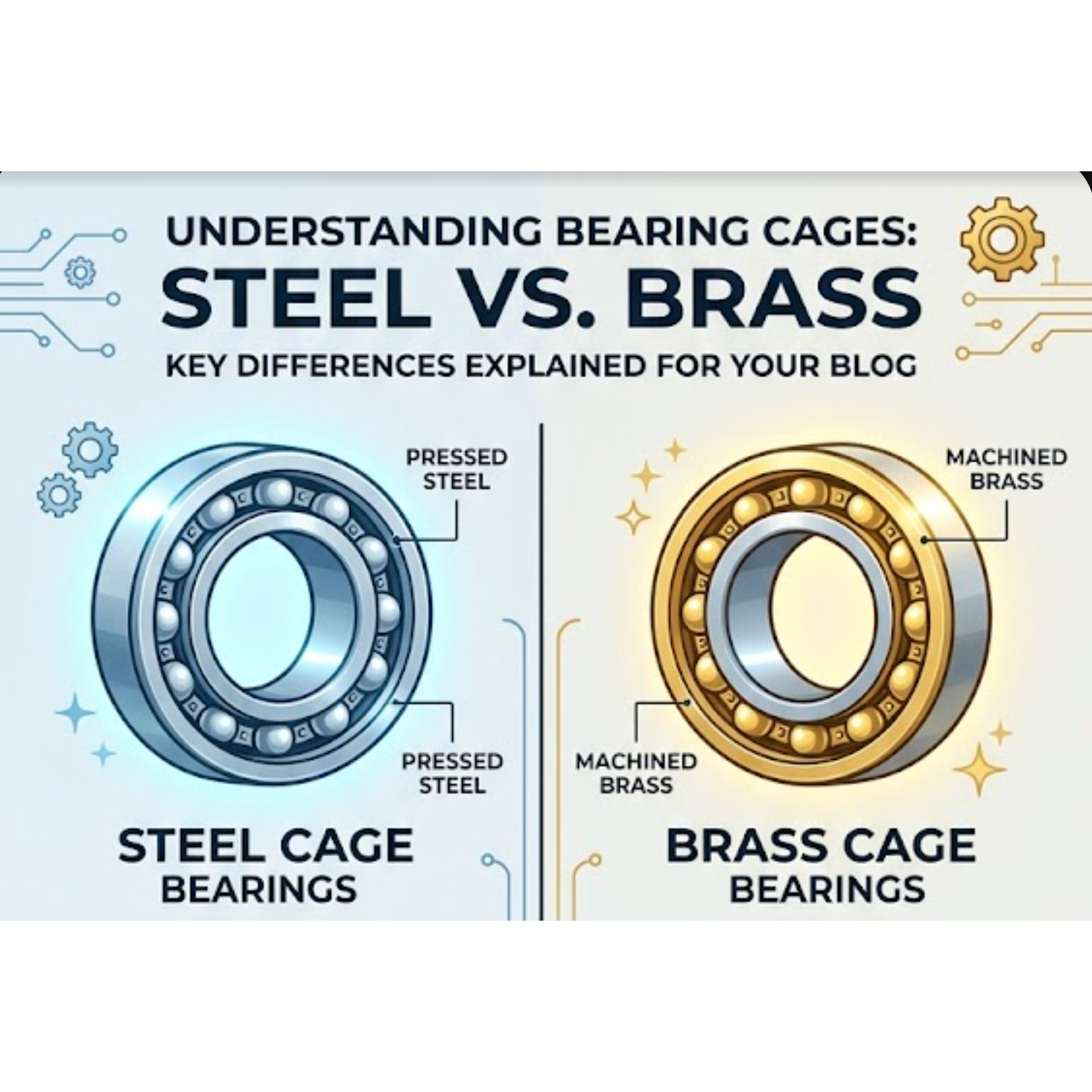
Brass Cage vs Steel Cage Bearings: Which One Should You Choose?
Selecting the right bearing is critical for ensuring equipment reliability, reducing maintenance costs, and maximizing machine uptime. While engineers often focus on bearing type and load capacity, the bearing cage material is equally important. Two of the most common cage materials used in industrial bearings are brass and steel.
Understanding the differences between brass cage bearings and steel cage bearings can help maintenance teams, procurement professionals, and engineers make informed decisions for their applications.
What is a Bearing Cage?
A bearing cage, also known as a retainer, is the component that separates and guides the rolling elements within a bearing. The cage prevents the rolling elements from coming into contact with each other, ensuring smooth operation and reducing friction.
The cage plays a significant role in bearing performance, especially in high-speed, high-load, and demanding industrial environments.
Brass Cage Bearings
Brass cages are typically machined or cast from high-quality brass alloys and are commonly used in heavy-duty industrial bearings.
Advantages of Brass Cage Bearings
Excellent Strength and Durability
Brass cages offer exceptional mechanical strength, making them suitable for applications involving heavy radial and axial loads. They maintain structural integrity even under demanding operating conditions.
Superior High-Temperature Performance
Brass retains its properties at elevated temperatures better than many alternative cage materials. This makes brass cage bearings ideal for applications such as steel mills, cement plants, mining equipment, and industrial gearboxes.
Reduced Risk of Seizure
Brass exhibits good anti-friction characteristics and is less prone to seizing under inadequate lubrication conditions compared to some other materials.
High Vibration Resistance
Industrial machinery operating under shock loads and vibration can benefit from the robustness of brass cages, which are less likely to deform under harsh conditions.
Typical Applications of Brass Cage Bearings
- Steel manufacturing plants
- Mining equipment
- Cement industries
- Heavy-duty gearboxes
- Rolling mills
- Paper mills
- Marine equipment
- Large industrial motors
Steel Cage Bearings
Steel cages are generally manufactured from pressed sheet steel or machined steel. They are widely used due to their strength, cost-effectiveness, and versatility.
Advantages of Steel Cage Bearings
Cost-Effective Solution
Steel cage bearings are generally more economical than brass cage bearings, making them a preferred choice for many standard industrial applications.
Lightweight Construction
Pressed steel cages are lighter than brass cages, which can contribute to improved performance in certain high-speed applications.
Good Mechanical Strength
Modern steel cages provide excellent strength and durability for a wide range of operating conditions.
Suitable for High-Speed Operation
Many high-speed bearing applications utilize steel cages because of their lower mass and excellent dynamic performance.
Typical Applications of Steel Cage Bearings
- Electric motors
- Pumps
- Fans and blowers
- Agricultural machinery
- Textile machinery
- Conveyors
- Packaging equipment
- General industrial machinery
Brass Cage vs Steel Cage Bearings: Key Differences
| Feature | Brass Cage Bearings | Steel Cage Bearings |
|---|---|---|
| Strength Under Heavy Loads | Excellent | Very Good |
| High Temperature Resistance | Excellent | Good |
| Vibration Resistance | Excellent | Good |
| Corrosion Resistance | Better | Moderate |
| Weight | Heavier | Lighter |
| Cost | Higher | Lower |
| High-Speed Capability | Good | Excellent |
| Service Life in Harsh Conditions | Excellent | Good |
| Heavy Industrial Applications | Preferred | Suitable |
Which Cage Material is Better?
The answer depends on the application.
Choose Brass Cage Bearings When:
- Operating under heavy loads
- Exposed to high temperatures
- Subjected to severe vibrations or shock loads
- Used in critical industrial equipment
- Maximum reliability is required
Choose Steel Cage Bearings When:
- Operating at high speeds
- Budget considerations are important
- Conditions are moderate and predictable
- Used in standard industrial machinery
- Weight reduction is beneficial
What Do Major Bearing Manufacturers Use?
Leading bearing manufacturers such as NSK, SKF, NTN, and FAG offer both brass cage and steel cage designs depending on the application requirements.
- Large spherical roller bearings often utilize machined brass cages.
- Many standard deep groove ball bearings use pressed steel cages.
- High-load industrial applications frequently favor brass cage designs.
- High-speed electric motor bearings commonly use steel cages.
The cage material is selected based on the operating environment, load conditions, lubrication method, speed, and expected service life.
Expert Recommendation
There is no universally superior cage material. Brass cage bearings excel in demanding industrial environments where strength, durability, and reliability are critical. Steel cage bearings provide excellent performance in general industrial applications while offering a more economical solution.
Before selecting a bearing, factors such as operating speed, load, temperature, lubrication conditions, and environmental exposure should be carefully evaluated.
Manish Bearing Enterprises – Your Trusted Bearing Partner
At Manish Bearing Enterprises, we help industries select the most suitable bearing solutions for their applications. We supply genuine bearings from leading manufacturers, including NSK, SKF, NTN, FYH, and other trusted brands.
Whether you require brass cage spherical roller bearings for heavy industrial machinery or steel cage bearings for high-speed applications, our technical team can help you identify the right product for maximum performance and reliability.
Contact Manish Bearing Enterprises today for expert guidance on bearing selection, industrial maintenance solutions, and genuine bearing supplies across Delhi NCR and North India.